Invitation

Dublin, IRL
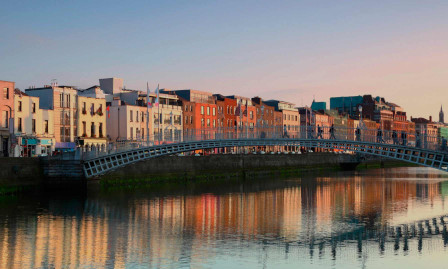
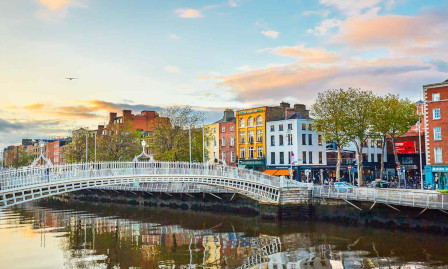
Dublin, Ireland’s capital city, is situated on the east coast along the shores of Dublin Bay, at the mouth of the River Liffey. Easily accessible and well connected, the city combines a compact historic centre with a vibrant modern atmosphere.
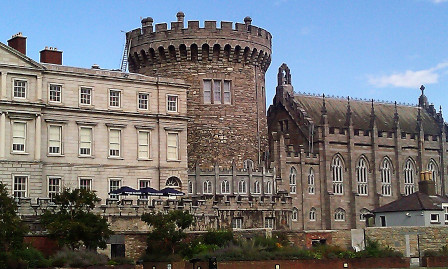
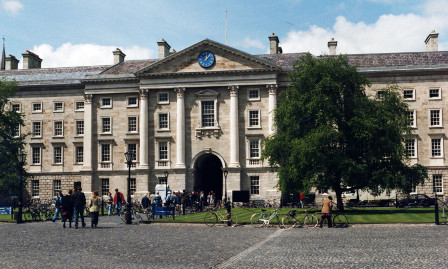
Dublin’s origins date back over a thousand years to a Viking settlement established in the 9th century, known as Dubh Linn (“black pool”). Over the centuries, the city developed under Norman, medieval and later British rule, becoming Ireland’s political, commercial and cultural centre. Many of Dublin’s most notable landmarks reflect this rich history, including Dublin Castle, Christ Church Cathedral and Trinity College, founded in 1592 and home to the world-famous Book of Kells.
In the 18th and 19th centuries, Dublin flourished as a Georgian city, a legacy still visible today in its elegant squares and terraces. The city also played a central role in Ireland’s journey to independence in the early 20th century, with historic sites linked to the Easter Rising and the foundation of the modern Irish state.
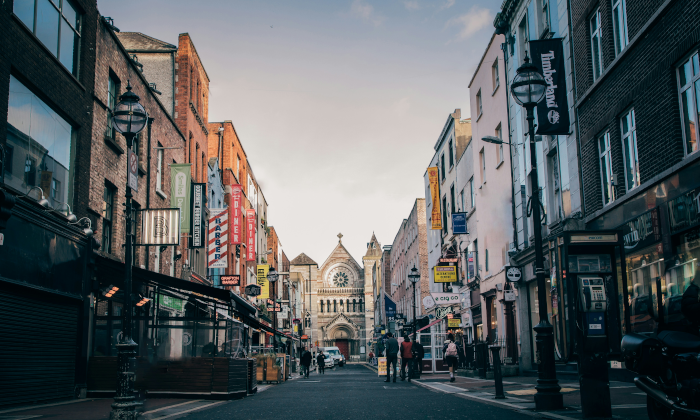
Today, Dublin is a lively and welcoming city, renowned for its literary heritage, traditional music, hospitality and culinary scene. Visitors can enjoy historic landmarks, museums, theatres and green spaces, as well as easy access to Ireland’s scenic countryside and renowned equestrian traditions. As host of the 2026 WBFSH General Assembly, Dublin offers a distinctive blend of history, culture and contemporary life.
Dublin, IRL
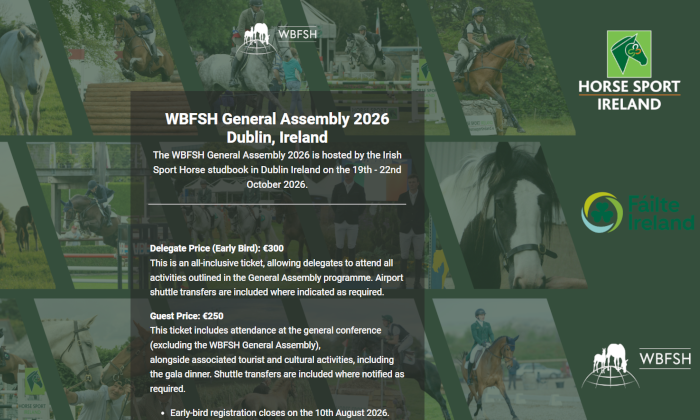
23 years later, the WBFSH returns to Dublin.
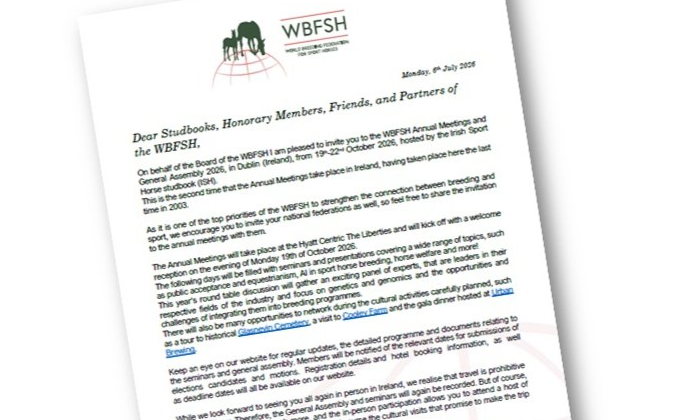
Herewith the President Jan Pedersen and the WBFSH board warmly invite all its members and associates to participate at this year's annual meetings. Generously hosted by the Irish Sport Horse Studbook (ISH), we look forward to seeing you in Dublin.
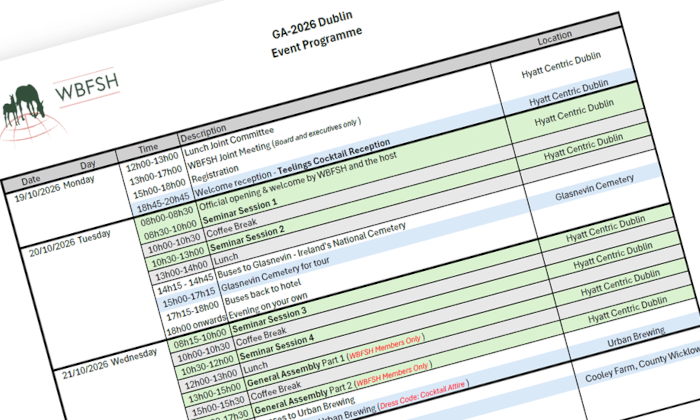
The Annual Meetings will take place at the Hyatt Centric The Liberties and will kick off with a welcome reception on the evening of Monday 19th of October 2026.
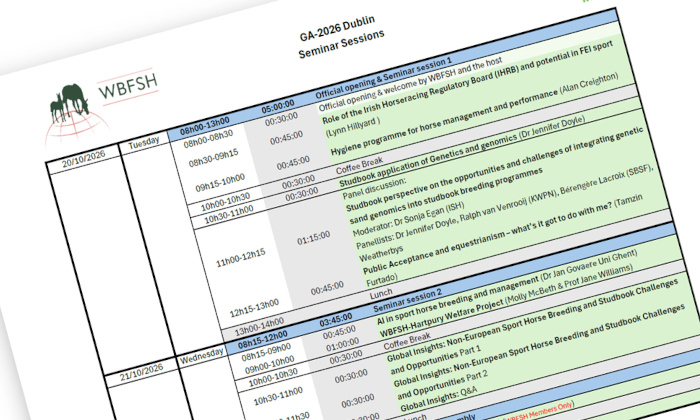
The following days will be filled with seminars and presentations covering a wide range of topics, such as public acceptance and equestrianism, AI in sport horse breeding, horse welfare and more.
This year's round table discussion will gather an exciting panel of experts, that are leaders in their respective fields of the industry and focus on genetics and genomics and the opportunities and challenges of integrating them into breeding programmes.
There will also be many opportunities to network during the cultural activities carefully planned, such as a tour to historical Glasnevin Cemetery, a visit to Cooley Farm and the gala dinner hosted at Urban Brewing.
Dublin, IRL
Discover Dublin through the eyes of your hosts at the Irish Sport Horse Studbook! They've put together a curated selection of local recommendations to help you make the most of your time in the city during the WBFSH General Assembly 2026.
From favourite places to eat and enjoy a drink, to lively music spots, unique shopping destinations, famous sights and must-see landmarks, this interactive map brings together some of the very best of Dublin.
Click on the icons to explore each location and discover the hosts' recommendations and local tips you might not find in a traditional guidebook. Whether you're looking for a great Irish meal, a cosy pub, a bit of culture, or simply somewhere worth visiting between seminars, consider this your personal guide to experiencing Dublin like a local.
Enjoy exploring!
Dublin, IRL
Travel to Dublin by Plane:
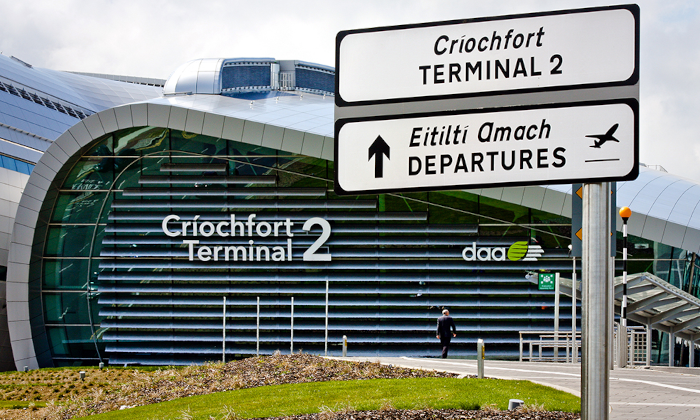
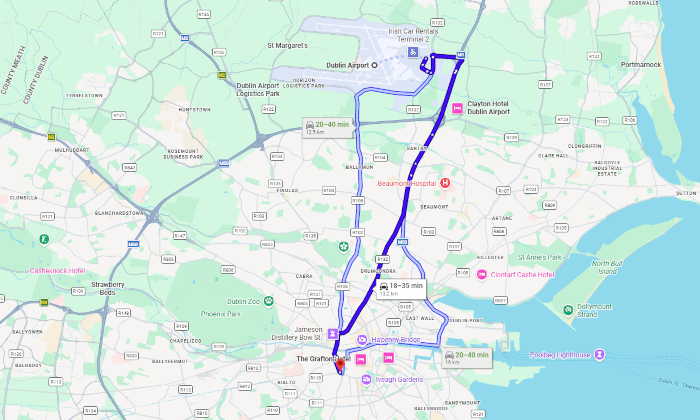
Dublin Airport (DUB) is the busiest of Ireland's airports, located in Collinstown. The airport lies about 12 km north from the event's venue, approximately 25 minutes by car, except during rush hour when travel time can reach 50 min.
The Transport for Ireland (TFI) Network provides frequent, reliable and 24h bus service to connect you to and from Dublin Airport to the city centre (10,46 EUR for the trip with Dublin Express). To book your bus, visit Dublin Airport's Bus Tickets. At the airport, it is also possible to rent a car or take a taxi (+- 40 EUR for the trip).
On Thursday 22nd after the programme ends there will be three shuttles available. Please contact the host studbook to ensure availability on the shuttle should you require it.
Dublin, IRL
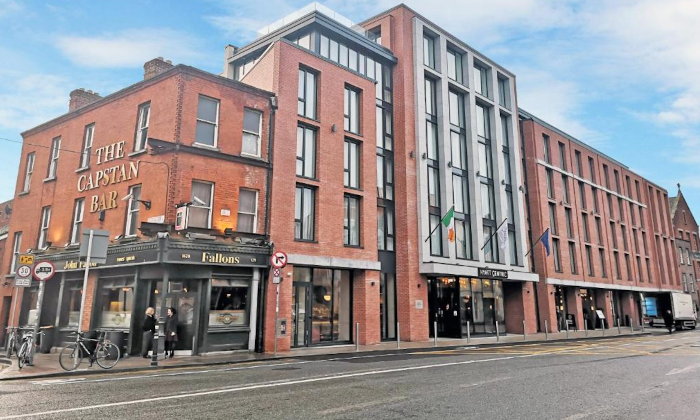
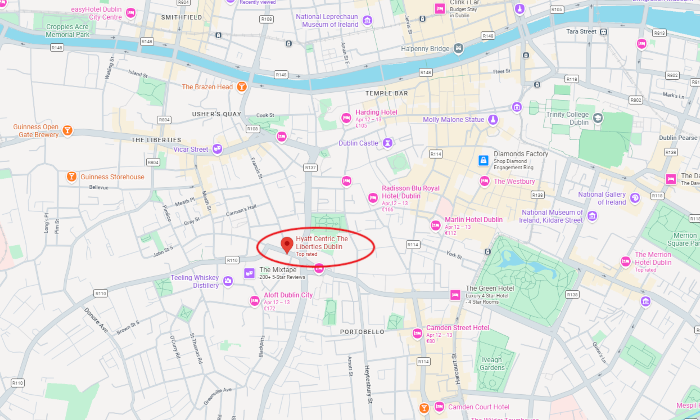
Our partner hotel is the Hyatt Centric. A beautiful hotel located in The Liberties, one of the oldest parts of Dublin. A perfect location for exploring many of Dublin's centre's top attractions, uncovering history dating back centuries and everything in between.
Rooms can be booked and paid for at a special group rate depending on availability. A block reservation of rooms has been made. It is recommended to book accommodation as soon as possible as the hotel rooms are released as follows:
After this date, availability cannot be guaranteed.
We recommend you book accommodation as soon as possible, as Dublin is a popular destination and will host important events at the same period and room availability cannot be guaranteed in case of late bookings.
The group rate applies for any dates booked between Sunday 18th October and Friday 23rd October 2026. All reservations must be guaranteed with a valid credit card belonging to the guest the booking is for.
Rooms are available for check-in from 15h00 on the day of arrival and check-out is before 12h00 on the day of departure.
Cancellation conditions:
Rooms can be cancelled free of charge if done maximum two days before arrival. All cancellations done after 11:59PM two days before arrival will be charged 1 night fee.
Prices:
Address:
Dean Street, Dublin,
D08 W3X7, Ireland
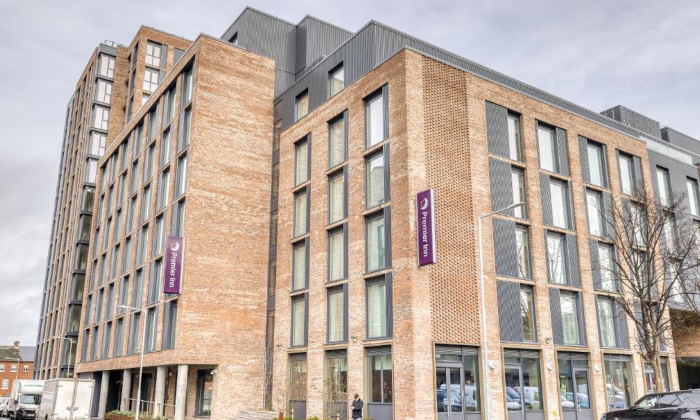
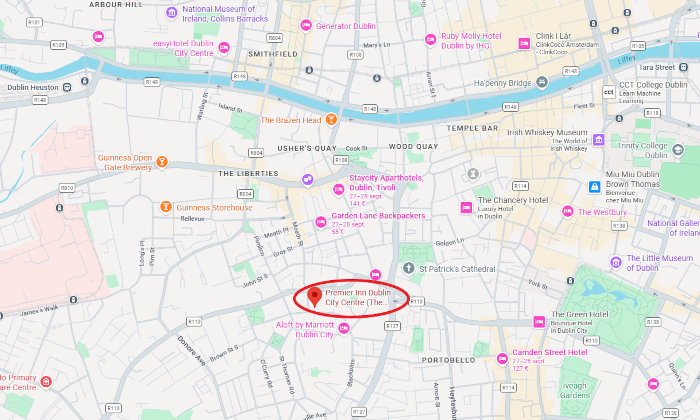
Premier Inn Dublin City Centre (The Liberties)
For those that wish to book more affordable accommodation, the Premier Inn Dublin City Centre has been suggested as an option. It is located just a three-minute walk from the Hyatt Centric.
Brabazon Place, 32 Newmarket, Dublin D08 YF89, Ireland
This is not a partner hotel, and special group booking rates have not been arranged.
Dublin, IRL
The annual meetings take place during autumn (September to November) - The climate in autumn in Ireland brings cool temperatures (5 - 16 degrees C) and atmospheric mist.
The Irish weather is well-known for featuring all four seasons in one day.
The official currency in Ireland is the Euro (€). Credit and debit cards are widely accepted, including Visa, Mastercard, American Express, Apple Pay and Google Pay. Contactless payments are commonly used throughout Ireland. It is still advisable to carry a small amount of cash for occasional smaller purchases or venues where card facilities may be limited. VAT is included in displayed prices and varies depending on the goods and services purchased.
Dublin is one of Europe's more expensive cities, so visitors should budget accordingly. For meals, refreshments, taxis and incidental expenses, a daily budget of approximately €50–€150 per person is recommended, depending on personal spending habits. There are options available to suit a range of budgets, from casual cafés and restaurants to premium dining and shopping experiences.
Ireland is known for its friendly and welcoming culture. A polite and informal approach is appreciated in both business and social settings. While tipping is appreciated it is not obligatory. In restaurants, a tip of 10–15% is customary for good service if a service charge has not already been included. Tipping in cafés, bars and taxis is completely discretionary.
Ireland has two official languages: English (the primary everyday language for nearly everyone) and Irish, locally known as Gaeilge or simply "Irish" (rather than "Gaelic"). While English is spoken nationwide, Irish remains the primary spoken language in designated rural regions known as the Gaeltacht.
The standard voltage in Ireland is 230v (volts) and 50Hz (Hertz).
Plugs of type G are used (three rectangular pins, same as the UK).
The standard VAT rate is 23%.
Dublin, IRL
Online registration opens on Monday 06th July 2026. Registration closes on Saturday 19th September 2026. No registrations are possible after this date.
All registrations are made online. Multiple delegates can be signed up in one registration, and it is possible to book for guest participants (includes cultural activities and Gala Dinner only). You will receive a confirmation email after booking - please check that your details are correct.
A payment link will also be sent to you after submitting your registration. Please check your spam folder.
Only one invoice per registration submission will be issued. Payment is due within 5 days of the issue of the invoice. If payment is not made within this period, the registration will be cancelled, and a new registration will have to be made.
Registration fees:
| Type of registration | Early bird (until 10th August) | Full price (until 19th September) |
|---|---|---|
| Full delegate | 300 EUR | 370 EUR |
| Guest (cultural activities and Gala Dinner only) | 250 EUR | 320 EUR |
Dublin, IRL
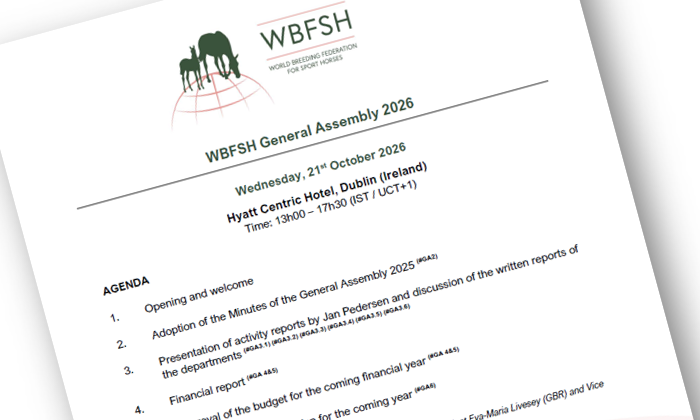
Find all relevant documents for the annual meetings here. Please check in regularly for updates.
Every year the WBFSH Annual Meetings and General Assembly are hosted by one of the studbooks members of the WBFSH. Check out previous years assemblies:

To filter, search or view more rankings you need to login or create a FREE account with the WBFSH
Create FREE AccountAlready have an account?
Sign In